

The Challenge
Canada faces a structural housing deficit of 500,000-1.5 million units per year and 5.5-6 million units in North America.
Traditional construction is slow, cost-heavy and not scalable
Manufacturing capacity for modular construction is insufficient
Demand is outpacing supply every year
Younger generations cannot secure homes
Developers are facing margin compression + approval delays


The Opportunity
Every major housing system globally is turning to industrialized construction to solve affordability, sustainability, and speed challenges.
Modular + automated construction is the only scalable path to housing volume.
40–60% faster build cycles
Cost stability via repeatable production
25-50% waste reduction
50-90% complete on-site delivery
Government support and funding incentives are growing, removing barriers and seeking asset protection.
*based on estimates
Pipeline Strength
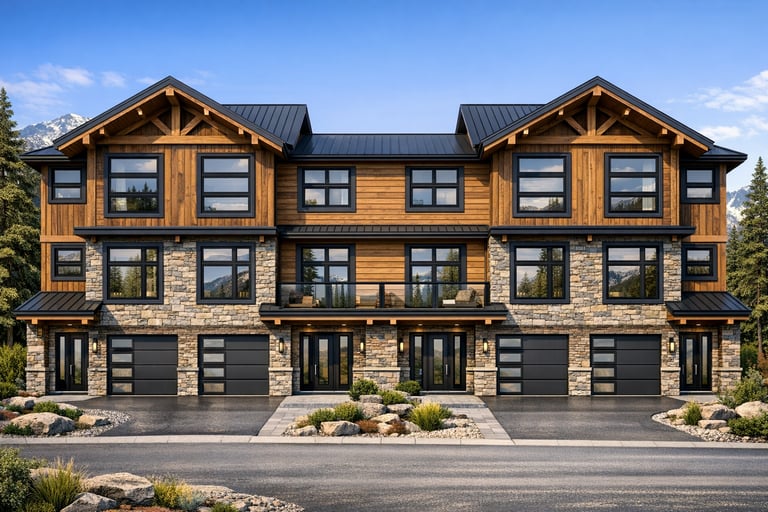
Pipeline includes early-stage agreements, feasibility reviews with municipalities, and developer partnerships representing over 6,000+ units.
This portfolio includes:
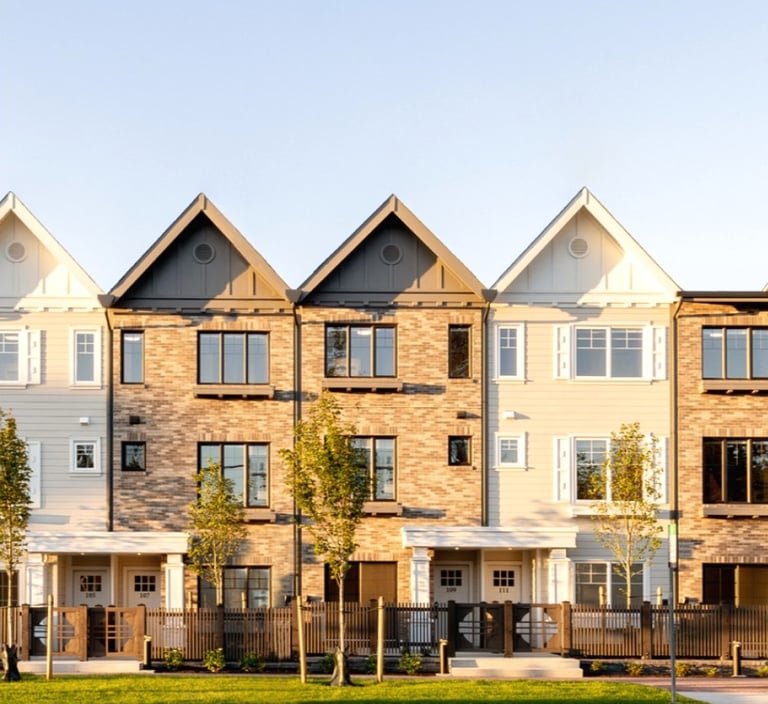
Townhome developments
Attainable housing communities
Low-rise and mid-rise apartment blocks
Large-scale mixed-use towers
Brownfield-to-manufacturing redevelopment sites





Competitive Advantage
Automation + Industrial Fabrication Capability


6,000+ Continuous Unit Deployment Pipeline = Scaling Demand
Hybrid Investment Structure + Build to Rent Yield
Technology & Licensing Reveue Potential







Sustainability and ESG Impact
Impact of Industrialized Construction

Lower Carbon Output
vs Traditional (30-60%)


Reduced Waste by 24% = Less Landfill


Faster Delivery = Improved Housing Attainability
Efficiency and Productivity Improvement


Improved Quality and Consistency


Investment Strategy


Equity Participation
Direct ownership in the industrialized housing ecosystem
Participation in factory output, licensing, and development profits
Joint Venture (JV) Structures
Project-specific or regional partnerships
Shared ownership in factories, production lines, or developments
Co-investment in land, infrastructure, and automation
Hybrid Capital Options
Blend of equity and revenue participation
Preferred equity or convertible structures
Returns tied to factory throughput, development cash flow, or licensing
BLUVANTA partners with family offices, institutional funds, and private equity groups to deliver scalable housing through vertically aligned manufacturing.
Our approach integrates real estate development, modular construction, and capital strategy into a single cohesive framework. This model allows investors to participate in the transformation of Canada’s housing landscape while benefiting from predictable, real-asset–backed growth.


Development • Manufacturing • Smart Living
info@bluvanta.ca
© 2026. All rights reserved.